
Category Archives: Uncategorized

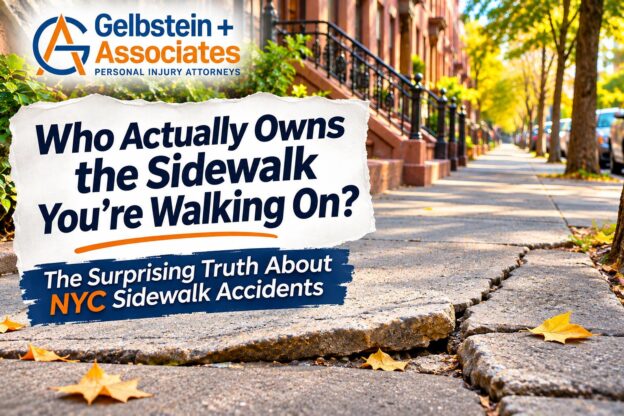
Who Actually Owns the Sidewalk You're Walking On? The Surprising Truth About NYC Sidewalk Accidents

Who Actually Owns the Sidewalk You’re Walking On? The Surprising Truth About NYC Sidewalk Accidents

Who Actually Owns the Sidewalk You’re Walking On? The Surprising Truth About NYC Sidewalk Accidents

You walk on them every day. You probably never think about who owns them. But if you trip, fall, and get injured, the answer could change everything.

Picture this.

You’re walking down a Brooklyn street, perhaps heading to work, picking up groceries, or rushing to catch a bus.

Suddenly, your foot catches on an uneven sidewalk. Before you know it, you’re on the ground.

Your first thought might be embarrassment. Your second might be whether you’re injured.

But here’s a question that probably wouldn’t cross your mind:

Who is actually responsible for that piece of sidewalk?

The obvious answer might be New York City.

Surprisingly, that’s often not the case.

And understanding why could make an enormous difference if you’re ever injured in a sidewalk accident.

New York City Has Over 12,000 Miles of Sidewalks. Who Takes Care of Them?

That’s right. According to the New York City Department of Transportation, NYC has more than 12,000 miles of sidewalks.

That’s a tremendous amount of concrete to maintain.

Here’s where things get interesting.

Although sidewalks are generally part of the public pedestrian network, the responsibility for keeping them safe often falls on the owners of the properties directly next to them.

Under New York City Administrative Code Section 7-210, many property owners are legally responsible for maintaining adjoining sidewalks in a reasonably safe condition.

That can include:

  • Repairing broken or uneven concrete.
  • Addressing dangerous cracks and holes.
  • Removing snow and ice when legally required.
  • Correcting hazardous sidewalk conditions.
  • Maintaining sidewalks to help prevent pedestrian injuries.

And if someone is injured because a property owner negligently failed to meet those responsibilities, that owner may be legally liable.

In other words, the sidewalk may be public, but the responsibility for an injury may be private.

Here’s the Twist: Not Every Property Owner Has the Same Responsibility

Imagine two nearly identical sidewalks on the same Brooklyn block.

One is in front of an apartment building.

The other is in front of a small, owner-occupied residential home.

Both have dangerous cracks.

Someone trips and suffers an injury.

Would the same party be responsible in both situations?

Not necessarily.

New York City’s sidewalk liability law contains an important exception for certain one-, two-, and three-family residential properties that are owner-occupied and used exclusively for residential purposes.

For qualifying properties, the City may remain responsible for injuries caused by negligent sidewalk maintenance, depending on the circumstances.

But that doesn’t automatically mean every small homeowner is protected from liability. An owner who created a dangerous condition or made special use of the sidewalk may still face responsibility under other legal principles.

The lesson?

Two accidents that look almost identical can raise very different legal questions.

That Tiny Crack Could Become a Very Big Problem

Most of us have walked past a cracked sidewalk without giving it a second thought.

But an uneven sidewalk isn’t always a minor inconvenience.

A pedestrian who trips may suffer a fractured wrist, broken hip, knee injury, head injury, or another serious condition.

For older adults and people with mobility limitations, a fall can be especially devastating.

And the danger isn’t limited to cracks.

Raised concrete slabs, missing sidewalk sections, slippery surfaces, and poorly maintained walking areas can all create hazards.

Here’s something worth remembering: A sidewalk doesn’t have to look terrible to present a serious danger.

However, not every crack or fall automatically establishes negligence. The condition, its severity, how long it existed, and whether the responsible party had notice of it can all matter.

What If You Fall Outside a Store, Restaurant, or Office Building?

Let’s say you’re walking along a busy commercial street in Brooklyn, Queens, Manhattan, the Bronx, or Staten Island.

You trip on broken pavement outside a business.

Does that automatically mean the business is responsible?

No.

The business occupying the space may not own the building. The property owner may be a separate individual or company.

Determining responsibility may involve investigating property ownership, maintenance obligations, the cause of the dangerous condition, and whether other parties contributed to the accident.

That’s one reason sidewalk injury cases can become more complicated than they initially appear.

The location of the accident matters. But who controlled, maintained, or created the hazardous condition can matter just as much.

Five Things You Should Know If You’re Injured on an NYC Sidewalk

At Gelbstein & Associates, a leading personal injury law firm with a track record of major wins, understanding the details behind an accident is an important part of evaluating a potential injury claim.

If you’re injured in a sidewalk fall, these five steps can help protect your health and preserve important information.

  1. Photograph the exact location.

If it’s safe to do so, photograph the crack, raised concrete, ice, or other condition that caused the fall. Take both close-up and wider photographs showing nearby buildings and landmarks.

  1. Record the address.

The exact location can be crucial in determining which property owner or government entity may be responsible.

  1. Get medical attention.

Some injuries are not immediately apparent. Prompt medical evaluation can protect your health and document your condition.

  1. Identify possible witnesses.

Someone nearby may have seen the fall or noticed the dangerous condition before the accident.

  1. Don’t assume you know who is responsible.

What appears to be a straightforward sidewalk accident can involve multiple parties, exceptions to the law, and important filing deadlines.

When a government entity may be responsible, special notice requirements can apply, sometimes requiring action within just 90 days.

Frequently Asked Questions About NYC Sidewalk Accidents

Who is responsible for sidewalk repairs in Brooklyn, NY?

In many cases, the owner of the property adjoining the sidewalk is responsible for maintaining it. However, exceptions exist, particularly for qualifying owner-occupied one-, two-, and three-family residential properties.

Can I sue New York City if I trip on a sidewalk?

Potentially, depending on the location, property type, cause of the hazard, and applicable legal requirements. Many sidewalk injury claims instead involve private property owners.

Can I receive compensation after a sidewalk trip-and-fall accident?

Possibly. If negligence caused your injuries, compensation may be available for medical expenses, lost income, pain and suffering, and other legally recoverable damages. Each case depends on its specific facts.

How long do I have to file a sidewalk injury claim in New York?

Many negligence-based personal injury lawsuits in New York are subject to a three-year statute of limitations. However, claims involving New York City or other public entities can have substantially shorter notice requirements and different lawsuit deadlines. Exceptions may apply, so prompt legal advice is important.

Do I need a personal injury lawyer after a sidewalk accident?

Not every fall requires legal action. However, when an accident results in significant injuries, determining responsibility and preserving evidence can be challenging. An experienced New York City personal injury attorney can evaluate the circumstances and explain your options.

The Next Time You Walk Down a New York City Sidewalk, Remember This

Every sidewalk tells a story.

Some are maintained by private property owners. Others fall under different legal responsibilities.

Some hazards are obvious. Others can go unnoticed until someone gets hurt.

And when an injury occurs, determining responsibility may require far more than simply looking at where someone fell.

Knowing your rights doesn’t mean expecting an accident. It means being better prepared if one happens.

Serious Injuries Deserve Serious Attention

When an ordinary walk turns into a life-changing injury, having experienced legal representation can make a meaningful difference.

Gelbstein & Associates is a leading New York personal injury law firm with a track record of major wins and millions recovered for injured clients. The firm brings experience, determination, and a results-focused approach to serious personal injury matters.

If you or someone you love has suffered an injury in a sidewalk accident, the team at Gelbstein & Associates can help evaluate the circumstances and explain your legal options.

Gelbstein & Associates — We Don’t Back Down.

Call 855-LAW-24-07

Visit gelbstein.com

Prior results do not guarantee a similar outcome. This article is provided for general informational purposes and does not constitute legal advice.

 

The Most Dangerous Witness in Your Personal Injury Case Could Be Your Own Social Media

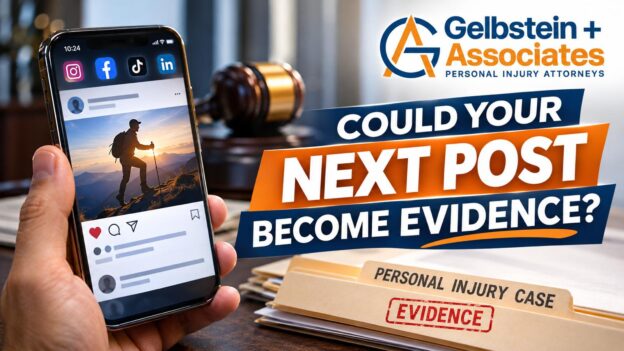
The Most Dangerous Witness in Your Personal Injury Case Could Be Your Own Social Media

The Most Dangerous Witness in Your Personal Injury Case Could Be Your Own Social Media

That innocent Instagram photo, Facebook post, or TikTok video could become evidence in a New York personal injury lawsuit. Here’s what accident victims need to understand before their next post.

Imagine suffering a serious back injury in a car accident.

You’re undergoing treatment, missing work, and struggling with pain. Weeks later, you attend a family celebration. Someone takes a photograph of you smiling, standing beside relatives.

You post it on Instagram.

Nothing unusual, right?

Now imagine that same photograph appearing on a screen during your personal injury lawsuit.

An insurance defense attorney asks: “If your injuries are so severe, why do you appear perfectly healthy in this photograph?”

The photograph doesn’t prove you’re uninjured. But without context, it could be used to challenge your credibility.

Welcome to an increasingly important aspect of modern personal injury litigation: social media evidence.

At Gelbstein & Associates, we understand how seemingly innocent online activity can become a significant issue in serious personal injury litigation. In today’s digital environment, understanding how electronic evidence can affect a claim is an important part of protecting an injury victim’s rights.

Your Social Media Account Could Become Part of Your Personal Injury Case

Social media has changed how attorneys investigate personal injury claims.

Facebook, Instagram, TikTok, LinkedIn, and other platforms can contain photographs, videos, comments, location information, and activity records that may become relevant to a lawsuit.

Insurance companies and defense attorneys may examine publicly available information and seek access to additional relevant material through the legal discovery process.

The surprising part?

Your posts don’t necessarily have to mention your accident to become relevant evidence.

A photograph from a vacation, a video from a family gathering, or a comment about your daily activities could be examined in connection with your claimed injuries.

However, social media content must be evaluated in context. A photograph showing someone smiling doesn’t establish that the person isn’t experiencing significant pain.

What New York Courts Say About Social Media Evidence

This isn’t simply a hypothetical concern.

In the landmark New York Court of Appeals decision Forman v. Henkin (2018), the court addressed whether photographs and other information from a personal injury plaintiff’s Facebook account could be disclosed during litigation.

The plaintiff alleged significant injuries following a horseback riding accident, including physical and cognitive limitations.

The defense sought Facebook materials potentially relevant to those claims.

The Court of Appeals explained that social media information may be discoverable when it is relevant to the issues in dispute, even when the account holder has restricted public access.

Importantly, the court also recognized that filing a personal injury lawsuit does not automatically entitle the opposing party to unrestricted access to an individual’s entire social media account.

The central legal question is relevance, not simply whether an account is public or private.

For New York injury victims, understanding these legal complexities is one reason experienced representation matters. At Gelbstein & Associates, we recognize the importance of evaluating digital evidence within the broader circumstances of each case.

Five Ways Social Media Can Complicate an Injury Claim

  1. Photographs Can Create a Misleading Impression

A photograph captures a moment, not an entire medical condition.

Someone recovering from a spinal injury might manage to stand for a family picture while experiencing considerable discomfort.

Nevertheless, a defense attorney may question whether the photograph is consistent with the person’s reported physical limitations.

The issue isn’t necessarily what the photograph proves.

It’s how that photograph might be interpreted.

  1. Videos May Raise Questions About Physical Limitations

A short video showing someone dancing, exercising, lifting an object, or participating in a recreational activity could become relevant when the individual claims those activities are restricted by an injury.

But context is essential.

The video may not reveal the pain experienced during the activity, the accommodations made, or the physical consequences afterward.

A knowledgeable personal injury attorney understands the importance of evaluating the complete circumstances rather than relying on isolated moments.

  1. Comments Can Be Taken Out of Context

Consider someone recovering from an accident who comments:

“Feeling great today!”

To friends and family, that statement might simply mean the person is having a better day emotionally.

In litigation, however, the statement could prompt questions about the individual’s reported condition.

Everyday expressions aren’t medical diagnoses, but their meaning may still become disputed.

  1. Friends and Family Can Create Evidence Without Your Involvement

You don’t necessarily need to publish something yourself for it to become relevant.

A friend might tag you in a photograph, mention you in a post, or upload a video featuring you.

Depending on the circumstances, that material could become part of an investigation.

This is one reason digital evidence can be more complicated than many accident victims realize.

  1. Deleting Posts Can Create an Entirely New Problem

This may be the most important point in the entire article.

Deleting a potentially damaging social media post after an accident could create additional legal complications.

Once litigation is reasonably anticipated, relevant electronic information may need to be preserved.

Improper destruction of evidence, sometimes called spoliation, can lead to serious consequences, potentially including court sanctions.

Deleting content is not necessarily the same as making it legally inaccessible.

Before changing or removing potentially relevant material, speak with your attorney about your preservation obligations.

Does Making Your Social Media Account Private Protect You?

Not necessarily.

Privacy settings can limit who sees your content publicly, but they do not automatically prevent relevant material from being obtained through lawful discovery.

Under New York law, courts evaluate whether requested information is material and necessary to the litigation.

That doesn’t mean opposing attorneys can simply demand unrestricted access to every private conversation, photograph, or message.

Discovery requests must be appropriately tailored, and courts can consider privacy concerns and protections against overly broad requests.

Private does not always mean protected from discovery.

What Should You Do With Social Media After an Accident?

If you’ve been injured in a car accident, construction accident, slip-and-fall incident, or another event that may lead to a personal injury claim, consider these precautions:

  1. Think carefully before posting. Avoid public discussions about your injuries, treatment, physical activities, or legal case without first consulting your attorney.
  2. Preserve existing content. Don’t assume deleting photographs, videos, messages, or posts is appropriate. Relevant evidence may need to be retained.
  3. Be mindful of tags and third-party posts. Friends and relatives may unintentionally share information relevant to your case.
  4. Be accurate and consistent. Describe your symptoms and limitations truthfully to medical professionals and your attorney. Injuries can fluctuate, and those changes should be documented accurately.
  5. Discuss your online activity with your attorney. An experienced personal injury lawyer can explain what information may be relevant and how to comply with your legal obligations.

The objective is not to hide evidence or create an artificial online image.

It’s to avoid unnecessary misunderstandings while protecting the integrity of your case.

Could Your Social Media Activity Affect Your Injury Claim?

Even seemingly harmless posts can raise questions during personal injury litigation.

If you’re concerned about how online activity, photographs, or electronic records might affect your case, speaking with an experienced attorney can help you understand your options and obligations.

Contact Gelbstein & Associates at 855-LAW-24-07 to discuss your situation.

Why Digital Evidence Matters in New York Personal Injury Litigation

Personal injury cases increasingly involve more than medical records, witness statements, and accident reports.

Electronic information can provide valuable insight into the circumstances of an accident and the injuries that follow.

Depending on the case, relevant digital evidence may include social media content, surveillance recordings, vehicle data, photographs, electronic communications, and other records.

For accident victims in Brooklyn, Queens, Manhattan, the Bronx, Staten Island, and throughout New York, understanding the potential role of digital evidence is an important part of protecting their legal interests.

An effective personal injury investigation requires more than identifying who caused an accident.

It requires understanding the evidence, anticipating potential disputes, and developing a case supported by reliable facts.

Frequently Asked Questions About Social Media and Personal Injury Claims

Can insurance companies look at my social media after an accident?

Yes. Insurance companies and their investigators may review publicly available social media content. Additional private information may be obtainable through lawful discovery when relevant to a lawsuit.

Can a Facebook or Instagram photograph hurt my personal injury case?

Potentially. A photograph may be used to question the extent of claimed injuries or physical limitations. However, photographs must be considered in context and do not automatically disprove an injury.

Can deleted social media posts be used as evidence?

Potentially. Deleted information may sometimes remain available through preserved copies, other users, or lawful recovery methods. Improper deletion of relevant evidence can also create legal problems.

Can my private Instagram account be examined in a New York personal injury lawsuit?

Yes, relevant private social media information may be subject to discovery. Courts evaluate the scope of requests based on relevance and other applicable legal protections.

Should I stop using social media after filing a personal injury claim?

There is no universal requirement to stop using social media. However, it is wise to discuss online activity, preservation requirements, and potential risks with your attorney.

Your Personal Injury Case Deserves More Than a Surface-Level Investigation

In today’s digital world, evidence can come from unexpected places.

A photograph, a comment, a video, or a seemingly insignificant online interaction may become part of a much larger legal dispute.

Understanding how that information could affect a case requires careful preparation, legal knowledge, and strategic thinking.

At Gelbstein & Associates, we recognize that serious personal injury litigation demands a thorough understanding of both traditional and emerging forms of evidence.

Because winning arguments begin with understanding the facts.

If you’ve suffered a serious injury and have questions about protecting your rights, speak with an experienced personal injury attorney before making decisions that could affect your case.

GELBSTEIN & ASSOCIATES

WE DON’T BACK DOWN.

855-LAW-24-07

gelbstein.com

This article provides general educational information about New York personal injury law and is not legal advice. The relevance and discoverability of social media evidence depend on the facts of each case.


Accident

The Most Dangerous Words After a Car Accident: “I’m Fine.”

You walked away from the accident. But what if the injury you can’t see is the one that changes your life?

The crash is over. Your car is damaged, but you’re standing. You’re talking. You’re walking.

You call your family and say the two words everyone wants to hear:

“I’m fine.”

But what if you’re not?

What if the most serious consequence of your accident hasn’t revealed itself yet?

The Injury You Don’t See Coming

Not every serious injury comes with blood, broken bones, or an ambulance ride.

Some injuries, particularly concussions and traumatic brain injuries (TBIs), can be difficult to recognize immediately.

According to the Centers for Disease Control and Prevention (CDC), concussion symptoms may not appear until hours or even days after an injury.

Warning signs can include:

  • Persistent headaches or dizziness
  • Memory loss or difficulty concentrating
  • Unusual fatigue or confusion
  • Changes in mood or personality
  • Blurred vision or sensitivity to light

And here’s something many accident victims don’t realize:

You can suffer a concussion without ever losing consciousness.

Most people recover from a concussion, but some experience symptoms that persist for weeks or longer.

Your Car May Look Fine. That Doesn’t Mean You Are.

One of the biggest mistakes after a car accident is assuming that limited vehicle damage means limited physical injury.

A dented bumper cannot tell you whether your brain was injured.

Neither can the fact that you walked away.

Only an appropriate medical evaluation can help determine the nature and extent of an injury.

At Gelbstein & Associates, we believe accident victims deserve to have their injuries taken seriously, especially when the consequences aren’t immediately visible.

The Clock Starts Ticking Before You Know What’s Wrong

Here’s where an already frightening situation becomes even more concerning.

While you may still be discovering the extent of your injuries, important insurance and legal deadlines may already be running.

In New York, no-fault insurance generally requires written notice of a claim within 30 days of an accident, subject to certain exceptions.

In New Jersey, most personal injury lawsuits must generally be filed within two years, although exceptions and different deadlines can apply.

Missing an applicable deadline can jeopardize your ability to pursue compensation.

That’s why speaking with an experienced personal injury attorney early can be important.

Gelbstein & Associates represents accident victims in New York and New Jersey. Call 855-LAW-24-07 to discuss your situation.

Don’t Let Two Words Determine Your Future

If you’ve been involved in a car accident, don’t assume you’re uninjured simply because you feel okay.

Seek prompt medical attention if a head injury is possible. Symptoms such as a worsening headache, repeated vomiting, seizures, or increasing confusion require emergency medical care.

Pay attention to changes in how you feel. Document your symptoms. Follow your healthcare provider’s recommendations.

And don’t overlook your legal rights.

Because walking away from an accident doesn’t always mean walking away without an injury.

At Gelbstein & Associates, we understand that the consequences of a serious accident can extend far beyond the scene of the crash.

If you or someone you love has been injured in a car accident in New York or New Jersey, our team is here to discuss your legal options.

Gelbstein & Associates

Call 855-LAW-24-07

gelbstein.com

Serious injuries deserve serious attention

Image

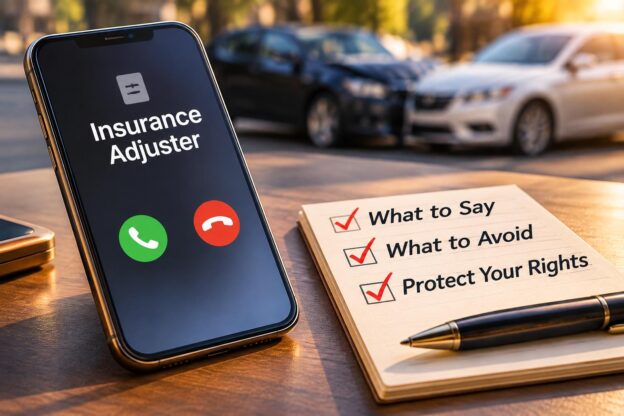
The Insurance Company Called After Your Accident. Should You Answer?

The Insurance Company Called After Your Accident. Should You Answer?

What New York and New Jersey Accident Victims Need to Know Before Speaking With an Insurance Adjuster

The phone rings. It’s an insurance adjuster calling about your recent accident.

They sound friendly, concerned, and eager to help. They may ask how you’re feeling, what happened, and whether you’re willing to provide a recorded statement.

It all seems routine.

But before you answer their questions, there’s something important you should understand: What you say to an insurance company after an accident can affect your personal injury claim.

At Gelbstein & Associates, our personal injury attorneys help accident victims throughout Brooklyn, New York City, and New Jersey understand their legal rights and navigate the insurance claims process.

Here’s what you should know before speaking with an insurance adjuster.

Why Is the Insurance Company Calling You?

Following a car accident, truck collision, pedestrian accident, or another incident involving injuries, an insurance company may contact you to investigate what happened.

An insurance adjuster’s job generally includes evaluating the claim, reviewing available evidence, determining coverage, and assessing potential financial responsibility.

The adjuster may want to:

  • Obtain your description of the accident.
  • Ask about your injuries and medical treatment.
  • Determine whether anyone else contributed to the accident.
  • Request a recorded or written statement.
  • Discuss medical expenses, lost wages, or property damage.
  • Explore the possibility of settling your claim.

While these questions may sound reasonable, your answers can become part of the insurance company’s evaluation of your case.

Remember: An insurance adjuster represents the interests of the insurance company, not necessarily your interests as an injured claimant.

Should You Speak With the Other Driver’s Insurance Company?

If another driver’s insurance company contacts you after an accident in Brooklyn, Queens, Manhattan, the Bronx, Staten Island, or elsewhere in New York, you should be cautious about discussing the details of the incident before obtaining legal guidance.

You generally do not have to give an immediate recorded statement to the other driver’s liability insurer simply because an adjuster requests one.

You can politely explain that you are not prepared to discuss the accident and would prefer to consult a personal injury attorney first.

This is especially important if you have suffered injuries, are still receiving medical treatment, or do not yet know the full extent of your condition.

However, your own insurance company is different. Your policy may require prompt accident notification and reasonable cooperation with its investigation. Certain claims, including New York No-Fault insurance claims, also have strict deadlines.

The safest approach is to understand which insurance company is calling, why it is contacting you, and what obligations apply before providing detailed statements.

Five Things to Avoid Saying to an Insurance Adjuster After an Accident

  1. “I’m Fine.”

Many accident victims initially believe their injuries are minor.

Adrenaline, shock, and the delayed appearance of certain symptoms can make it difficult to understand the full extent of an injury immediately after a collision.

Saying you’re fine when you have not been medically evaluated may create confusion if you later discover a more serious condition.

Be truthful and avoid making assumptions about your health.

  1. “It Was Probably My Fault.”

Determining responsibility for an accident can involve traffic laws, witness statements, surveillance footage, vehicle damage, and other evidence.

You may not have all the information necessary to determine who caused the collision.

Avoid guessing about fault or accepting responsibility before the facts are established.

  1. “I Don’t Think My Injuries Are Serious.”

A personal injury claim may involve medical expenses, rehabilitation, lost income, pain and suffering, and other damages.

Some injuries require additional examinations or treatment before their long-term effects become clear.

Avoid minimizing your injuries or predicting your recovery before you have reliable medical information.

  1. “Yes, You Can Record This Conversation.”

An insurance adjuster may request a recorded statement about the accident.

Before agreeing, ask whether the statement is required, which insurer is requesting it, and how it may be used.

Your obligations may differ depending on whether you are speaking with your own insurer or another party’s insurance company.

An experienced New York personal injury attorney can help you understand those obligations.

  1. “That Settlement Sounds Fair.”

An early settlement offer may seem attractive, particularly when medical bills are accumulating or an injury has prevented you from working.

However, accepting a settlement and signing a release can permanently resolve certain claims, even if additional expenses or complications arise later.

Before accepting an offer, it is important to understand the injuries, available insurance coverage, potential future medical needs, and legal rights involved.

What If the Insurance Company Offers You Money Immediately?

Some accident victims receive settlement offers before their medical treatment is complete.

An early offer is not automatically unfair. However, it may be difficult to evaluate the amount before the full consequences of an injury are known.

Depending on the circumstances, compensation in a personal injury case may involve:

  • Medical expenses and rehabilitation costs.
  • Lost wages and reduced earning capacity.
  • Future medical treatment.
  • Pain and suffering, when recoverable under applicable law.
  • Other financial losses resulting from the accident.

New York and New Jersey have different insurance laws, including rules that may limit certain claims following motor vehicle accidents.

A personal injury lawyer can evaluate whether an offer reasonably reflects the circumstances of your case.

New York Accident Victims: Don’t Miss Important No-Fault Insurance Deadlines

New York operates under a No-Fault automobile insurance system.

For eligible accident victims, No-Fault benefits may cover certain medical expenses and lost earnings regardless of who caused the accident, subject to statutory and policy limitations.

In New York, written notice of a No-Fault claim generally must be submitted within 30 calendar days of the accident, unless a legally sufficient justification for late filing applies.

This is one reason it is important not to ignore communication from your own insurance company.

You should promptly report an accident as required by your policy, seek appropriate medical care, and obtain legal advice if you are unsure how to proceed.

What About Car Accident Claims in New Jersey?

New Jersey also has automobile insurance laws that can significantly affect an injury claim.

Personal Injury Protection (PIP) coverage, policy choices, medical treatment requirements, and restrictions on the right to sue may all influence the claims process.

New Jersey drivers may have selected different coverage options that affect their ability to pursue compensation for certain injuries.

If an insurance adjuster contacts you after a car accident in New Jersey, understanding your policy and legal rights is essential before discussing a settlement.

An attorney familiar with New Jersey personal injury law can help determine which insurance provisions and legal requirements apply to your situation.

What Should You Do When an Insurance Adjuster Calls?

If you receive a call from an insurance company after an accident, consider these practical steps:

  1. Identify the caller. Ask for the adjuster’s name, insurance company, telephone number, and claim number.
  2. Determine which insurer is calling. Your own insurance company and another driver’s insurance company may have different rights and obligations.
  3. Avoid speculation. Do not guess about fault, injuries, or circumstances you cannot accurately recall.
  4. Keep records. Save insurance correspondence, medical bills, photographs, and relevant accident documents.
  5. Understand your deadlines. Insurance notification requirements and legal filing deadlines can affect your rights.
  6. Consider speaking with a personal injury attorney. Legal guidance can help you understand your obligations before providing detailed statements or accepting a settlement.

Most importantly, do not ignore legitimate insurance reporting requirements or requests that may affect your coverage.

Why Speaking With a Personal Injury Attorney Can Make a Difference

Following an accident, your immediate priorities should be your safety, medical care, and recovery.

Unfortunately, the insurance claims process can become complicated, especially when injuries are serious, responsibility is disputed, or multiple insurance policies are involved.

An experienced personal injury lawyer can help investigate the accident, evaluate available evidence, communicate with insurance companies, identify potentially responsible parties, and pursue compensation when legally appropriate.

At Gelbstein & Associates, we understand that a serious injury can affect much more than your physical health.

It can disrupt your ability to work, create financial uncertainty, and place unexpected pressure on your family.

Our goal is to help injured individuals understand their options and protect their interests throughout the legal process.

Looking for a Personal Injury Lawyer in Brooklyn, NYC, or New Jersey?

Whether you were injured in a car accident in Flatbush, a pedestrian accident in Borough Park, a collision in Williamsburg, or a serious accident elsewhere in New York City or New Jersey, obtaining reliable legal guidance can help you make informed decisions.

Gelbstein & Associates represents personal injury clients in cases involving car accidents, truck accidents, pedestrian injuries, slip-and-fall accidents, and other negligence-related incidents.

Our Brooklyn-based firm is committed to providing personalized attention and strong legal representation to people facing difficult circumstances after an injury.

Frequently Asked Questions

Do I have to answer the other driver’s insurance company after an accident?

You generally are not required to give an immediate recorded statement simply because the other driver’s liability insurer requests one. However, specific legal circumstances may create obligations, and your own insurer may have contractual reporting and cooperation requirements.

Can an insurance adjuster use my statements against my personal injury claim?

Statements you make may be documented and considered when an insurer evaluates responsibility, injuries, and compensation. This is why accurate communication is important.

Should I accept the insurance company’s first settlement offer?

Not without understanding the value of your claim and the legal consequences of accepting the offer. A settlement may release the insurer or responsible party from further liability.

How soon should I contact a personal injury lawyer after a car accident?

It is generally wise to seek legal advice as soon as reasonably possible after obtaining necessary medical care. Early guidance can help preserve evidence and identify important deadlines.

Can I still pursue compensation if I was partially responsible for the accident?

Possibly. New York and New Jersey apply different comparative-fault rules, and automobile insurance laws can also affect recovery. An attorney can evaluate the circumstances of your case.

Before You Speak With the Insurance Company, Know Your Rights

An accident can happen in seconds. Its consequences can last much longer.

You deserve the opportunity to understand your rights, receive appropriate medical care, and make informed decisions about your future.

If you’ve been injured in an accident, don’t feel pressured to make important decisions before you understand your options.

Gelbstein & Associates — Personal Injury Attorneys

Call 855-LAW-24-07

Visit GELBSTEIN.COM

2607 Nostrand Avenue, Brooklyn, NY 11210

Contact Gelbstein & Associates to discuss your situation and learn about your legal options.

Disclaimer: This article is provided for general informational purposes only and does not constitute legal advice. Insurance requirements and legal deadlines depend on the circumstances and applicable law. Reading this article does not create an attorney-client relationship.
Img

What Is The Statute Of Limitations For Personal Injury Cases In New York?

If you’ve been injured in an accident, you may be focused on medical treatment, recovering lost wages, and getting your life back on track. However, there is another important issue that every accident victim should understand: the statute of limitations.

The statute of limitations is the legal deadline for filing a lawsuit. If you wait too long, you could lose your right to pursue compensation for your injuries—even if your case is otherwise strong.

Here’s what you need to know about the statute of limitations for personal injury cases in New York.

What Is a Statute of Limitations?

A statute of limitations is a law that sets the maximum amount of time a person has to file a lawsuit after suffering an injury.

Once the deadline passes, courts will generally refuse to hear the case, and the injured person may lose the opportunity to recover compensation for medical bills, lost income, pain and suffering, and other damages.

Because these deadlines are strict, it is important to speak with a New York personal injury lawyer as soon as possible after an accident.

How Long Do You Have to File a Personal Injury Lawsuit in New York?

In most personal injury cases, New York law gives injured victims three years from the date of the accident to file a lawsuit.

This three-year deadline commonly applies to:

  • Car accidents
  • Truck accidents
  • Motorcycle accidents
  • Bicycle accidents
  • Pedestrian accidents
  • Slip and fall accidents
  • Dog bite injuries
  • General negligence claims

While three years may seem like a long time, building a strong personal injury case often takes significant investigation, evidence collection, and negotiations with insurance companies.

Are There Exceptions to the Three-Year Rule?

Yes. Certain types of personal injury cases have different deadlines.

Wrongful Death Claims

If a loved one dies as a result of another person’s negligence, the statute of limitations is generally two years from the date of death.

Claims Against Government Entities

If your injury involves a city, county, state agency, or other government entity, much shorter deadlines may apply.

In many cases, a Notice of Claim must be filed within 90 days of the incident. Missing this deadline can severely impact your ability to pursue compensation.

Medical Malpractice Cases

Medical malpractice claims are subject to different filing deadlines and rules. These cases often require careful legal review to determine the exact deadline.

Because exceptions may apply, it is always best to consult an experienced personal injury attorney as soon as possible.

Why Waiting Can Hurt Your Case

Even if you are still within the statute of limitations, waiting too long can weaken your claim.

Important evidence may disappear. Witness memories may fade. Surveillance footage may be deleted. Medical records can become more difficult to organize and present effectively.

Insurance companies often use delays to argue that injuries were not serious or were caused by something other than the accident.

The sooner an attorney can begin investigating your case, the better positioned you may be to pursue maximum compensation.

What Compensation May Be Available?

Depending on the circumstances of your case, you may be entitled to compensation for:

  • Medical expenses
  • Future medical treatment
  • Lost wages
  • Loss of earning capacity
  • Pain and suffering
  • Emotional distress
  • Property damage
  • Rehabilitation costs

Every case is unique, which is why a thorough evaluation by a personal injury lawyer is important.

Speak With a New York Personal Injury Lawyer Today

Understanding the statute of limitations is one of the most important steps in protecting your legal rights after an accident.

If you or a loved one has been injured due to someone else’s negligence, don’t wait until it’s too late. An experienced New York personal injury lawyer can review your case, explain the deadlines that apply, and help you pursue the compensation you deserve.

At Gelbstein & Associates, we fight aggressively for injured victims while providing the personal attention every client deserves. Contact our team today for a free consultation and learn how we can help protect your rights.